
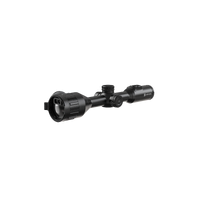
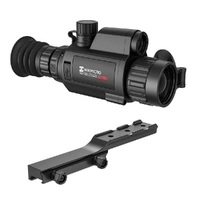
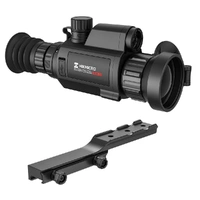
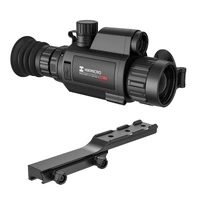
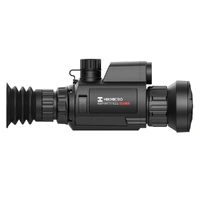
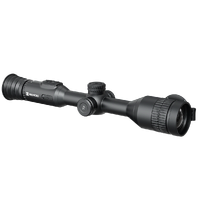
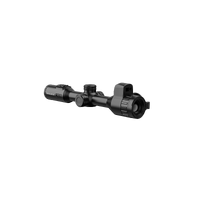
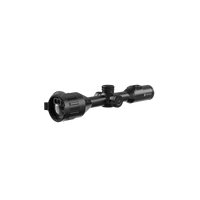
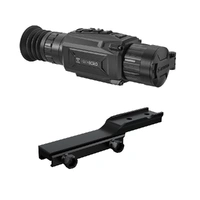
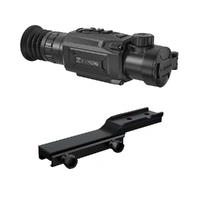
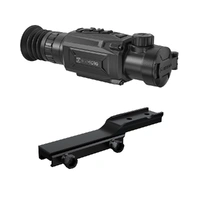
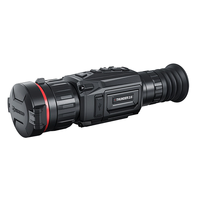
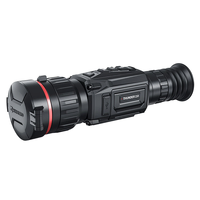
HikMicro Thermal Scopes
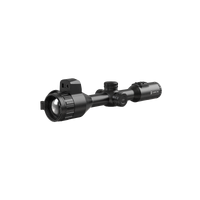
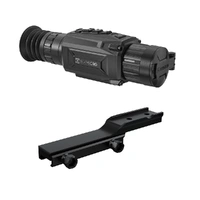
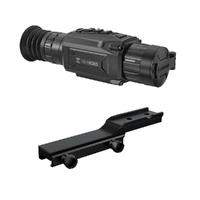
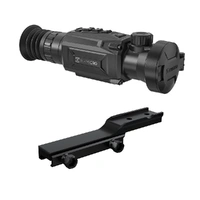
FAQs About Thermal Scopes
1. Can a thermal scope be used during the day?
If you plan on hunting during the day, they can certainly still be used, however you need to keep in mind they will not be as useful during the day, especially during some of your hotter days, as it will stop the targets from popping out as much.
There are some options which will give you multispectral capabilities to aid in daytime use, however many of your higher end options will have a fine enough sensor to help eliminate some of the downsides of daytime use.
2. Can a thermal scope see through glass?
Short answer: no. Glass reflects and blocks the infrared radiation that thermal scopes rely on to build an image, so instead of seeing what's on the other side, you're really just picking up surface heat and reflected temperature off the glass itself.
It's the same limitation you get when trying to use a thermal scope on walls made from brick, wood or concrete. The material gets in the way of the heat signature, so anything behind it stays hidden. If you need to see through glass, you'll want a traditional optic or camera instead; thermal is brilliant for open-air detection, but it has its limits when solid (or reflective) materials are involved.
3. Do thermal scopes work in fog?
Unlike night vision and traditional optics, you can use thermal scopes in foggy conditions, relying on the scope's heat detection capabilities which is what makes it possible to have a signature reading regardless of the weather or visibility.
They can provide you with dependability even in cloudy, rainy, snowy, daylight and pitch-black darkness conditions, as much as through dense foliage. One thing to pay attention to is how dense the fog is; light fog isn't an issue but thick fog can reduce detection range.
4. How far can you see with a thermal scope?
This is a question that often pops up, and the answer is it all depends on the model and brand you choose. When shopping, this is indicated by the manufacturer so you can get the idea of what you're browsing and buying. In general, thermal scopes detect heat signatures out to 2600m and sometimes even further in most of your higher end options.
For more image quality and advanced features, choose mid-range or high-end scopes over budget-friendly ones. However, it's important to add here that there's a difference in detection, recognition and identification ranges, known as DRI. Detection gives you the information if there's an object present, appearing in a different heat signature than the background. When you detect a target, you get the detection distance range.
You can't shoot with detection range alone because you don't have enough information about what type of target it is you see. When it comes to recognition, it's the distance rating that gives you the information about the type of object you see, and is the shorter distance of the two (around 75% less than the detection). Identification range, the shortest, is the distance at which you're able to differentiate objects. The target's size is crucial for all of these three. Stewart's quick tip for thermals covers this.
5. What is the best thermal scope for Australia?
As Australia's geographical location is under a dry and high-pressure belt, there are harsh weather conditions to be considered when choosing the ideal thermal scope. One of the most important features to have in mind when selecting is high sensor sensitivity to get the accurate heat signatures even when background heat matches that of the target.
This question will rely highly on use case and will differ from very minor circumstances in everyone's needs. If you can wrap your head around an objective lens that suits the distance it's needed for, and a sensor to suit the clarity you require, you can find a perfect option for your job.
6. What is the best thermal scope for the money?
It depends on where you plan to use it and what you plan to use it for, as these two aspects are helpful for defining the performance requirements, whether or not you can do with an entry-level design catered directly towards your needs, or if you require a high end option which can do multiple jobs quite well.
Be clear on the range you intend to cover, whether it's a big or small area, type of terrain, type of animal if it's for hunting purposes, and weather conditions, and then you can narrow down your choices. HikMicro's Stellar SQ50L 3.0, Nocpix's Ace range and Thermtec's Ibex are some popular choices for the features, reliability and value for money in their own areas of work.
7. Which is better, thermal or night vision scopes?
Each option of these two optic devices offers you advantages when out and about for recreational hunting, surveillance, search and rescue, wildlife observation, hiking, travel, and livestock management. If you're up for getting a more budget-friendly option, then the night vision scopes are the better choice. Cost-effective, they're also great for use in low-light conditions and offer clear images in close-to-mid ranges.
When it comes to scanning in pitch-black darkness, poor weather conditions, dense brush and uneven terrain, the thermal scopes are the go-to choice for optimal and fast tracking of targets considering they work with heat signatures instead of light. They may be more expensive, and may not give as much visual detail as the night vision alternative, but they offer an edge which you just can't get any other way, just ensure you don't point these directly at the sun.
At Scoped Out, we supply an array of quality optics, and test them out to give you the advice you need so be sure to contact us with your questions or concerns, and take a look at our videos on YouTube and our podcast for more details on the products.