
Night Vision Binoculars
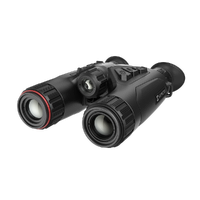
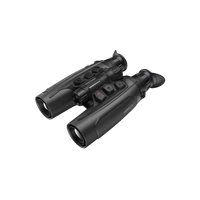
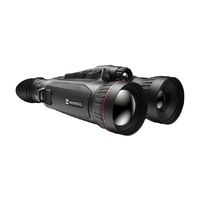
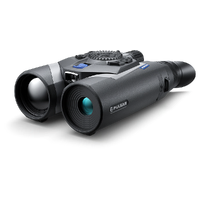
FAQs About Night Vision Binoculars
1. Do night vision binoculars really work?
Yes, they do and it’s all because of advanced features like image enhancement that help them amplify ambient light. Depending on the model, it may also have built-in thermal detection and infrared sensors for function even in darkness and cloudy, foggy conditions.
At Scoped Out, we don’t just sell these optics; we use them in the field. Our owner, Rusty, has worked in the optics industry for over a decade, and as he often points out, modern thermal and multispectral technology has completely changed the game. Depending on the model, premium binoculars will also feature built-in thermal detection and infrared (IR) sensors, allowing them to function flawlessly in pitch-black darkness, dense fog, or cloudy conditions.
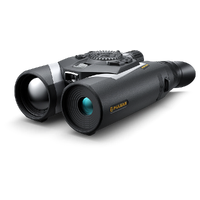
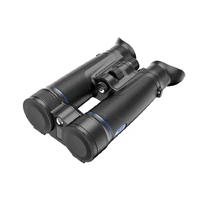
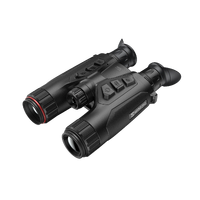
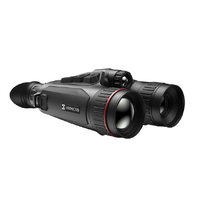
Top-tier multispectral binoculars from brands we trust, like Pulsar, HikMicro, and Guide IR, combine these specs to provide crystal-clear clarity for daylight use, nighttime animal detection, and reliable navigation. (Pro tip: If you want an inside look at how this technology is made, check out Episode 22 of our Bullet Points Podcast, where Rusty breaks down his recent trip to China to tour the massive HikMicro headquarters!)
2. Are night vision binoculars legal?
In general, it’s legal to use civilian-grade night vision binoculars and other night vision devices, like monoculars and scopes, in Australia for recreational and commercial use. However, when it comes to hunting and wildlife observation at night, there are some state-specific regulations to be considered as each state has its own local wildlife laws on protected species.
As we regularly discuss on the Bullet Points Podcast (like in Episode 23, where we dive deep into spotlighting vs. thermals for fox and rabbit control), night hunting for feral pest species is generally permitted. However, native wildlife is heavily protected. The same applies to privacy and surveillance laws. If you are purchasing night vision equipment for hunting or security, we highly recommend checking the specific wildlife laws and Department of Primary Industries (DPI) regulations in your state and ensuring you hold the correct licenses before heading out.
3. How far can night vision binoculars see?
On average, it’s around 100 to 200m with some having better capabilities than that. There are several factors that are crucial when selecting a night vision binoculars design that indicate how far you can see with it. Optical magnification, digital zoom, long range focus, sensor resolution and field of view are all large factors.
It’s equally advisable to check whether or not there's an image stabilisation algorithm or you’d require the use of a tripod too for stability - a must with long-distance viewing. Battery life is another essential factor to check, especially if you plan on using the binoculars for long-range observation for hours on end and require a reliable battery life for active use you can count on.
4. Can night vision binoculars be used in daylight?
While some night vision binoculars are reliable in daylight as much as twilight and after dark, not all of them are meant for daylight use. This is because traditional optical models that are equipped with intensifier tubes don’t have the needed built-in protection, these however are not a common option for commercial use.
Since they’re made with analog systems that intensify the existing light, daylight can easily permanently damage them by creating a white-out image, even if there’s the automatic bright light shutdown feature. Advanced digital designs don’t have the intensifier tubes and as such are safe for use in daylight conditions. To be on the safe side, however, it’s always advisable to check with the manufacturer’s instructions and specifications to avoid any unwanted issues and costly damages.
5. Why are night vision binoculars so expensive?
As these aren’t just any type of binoculars, the simple answer for the higher prices is in the high quality optics used for these night vision devices to give them the ability to gather and amplify light in low-light conditions. Although Gen 1 devices are generally on the lower price end, the more advanced Gen 2 and Gen 3 models with top features are all on the more expensive end with reason.
Weigh in all these crucial details, decide on what’s essential for your needs from thermal and digital CMOS sensors, laser rangefinder, high-quality photo and video capturing, real-time sync and sharing through a specialised app, one-handed focus silent operation, flexible charging and long operation time and what you can do without to determine the ideal option.
6. Can night vision binoculars see through walls?
No, it’s not possible to see through walls with night vision devices like binoculars, even if they have thermal sensors. This is because the binoculars are created to amplify the existing light and detect surface heat emitted by people or objects.
While thermal imaging is a technology used by maintenance professionals to detect water leaks, insulation leaks, and heat through smoke, it can’t see through walls and what’s behind them. When there’s a solid structure, like a wall made of sturdy materials in the example of bricks, concrete or wood, it acts as a barrier - more so when there’s a layer of insulation too. The same can be said about other materials, like glass as it reflects the infrared radiation.
7. Which is better, night vision goggles or binoculars?
While both options are performance-ready, the choice mainly comes down to whether you’re after long-range viewing magnification or close-range navigation. So, when shopping, it’s important to consider the purpose, needs and preference.
When you’re on the move and require a more hands-free operation, the goggles are a go-to choice as they’re head-mounted, lightweight and smaller. One drawback to them is they don’t offer the magnification of binoculars. This lack of feature explains why they’re also available at lower prices, especially among the entry-level designs.
In the case with the binoculars, with the incredible image quality even at long distances, and various features like thermal sensors and rangefinders, they’re great for surveillance, wildlife watching, hunting and stationary observation. They’re heavier than the goggle alternative, though, and require hand holding use.